Flagler ground conditionsPalm Coast is a planned city on flatwoods sand, and concrete has to be built for it
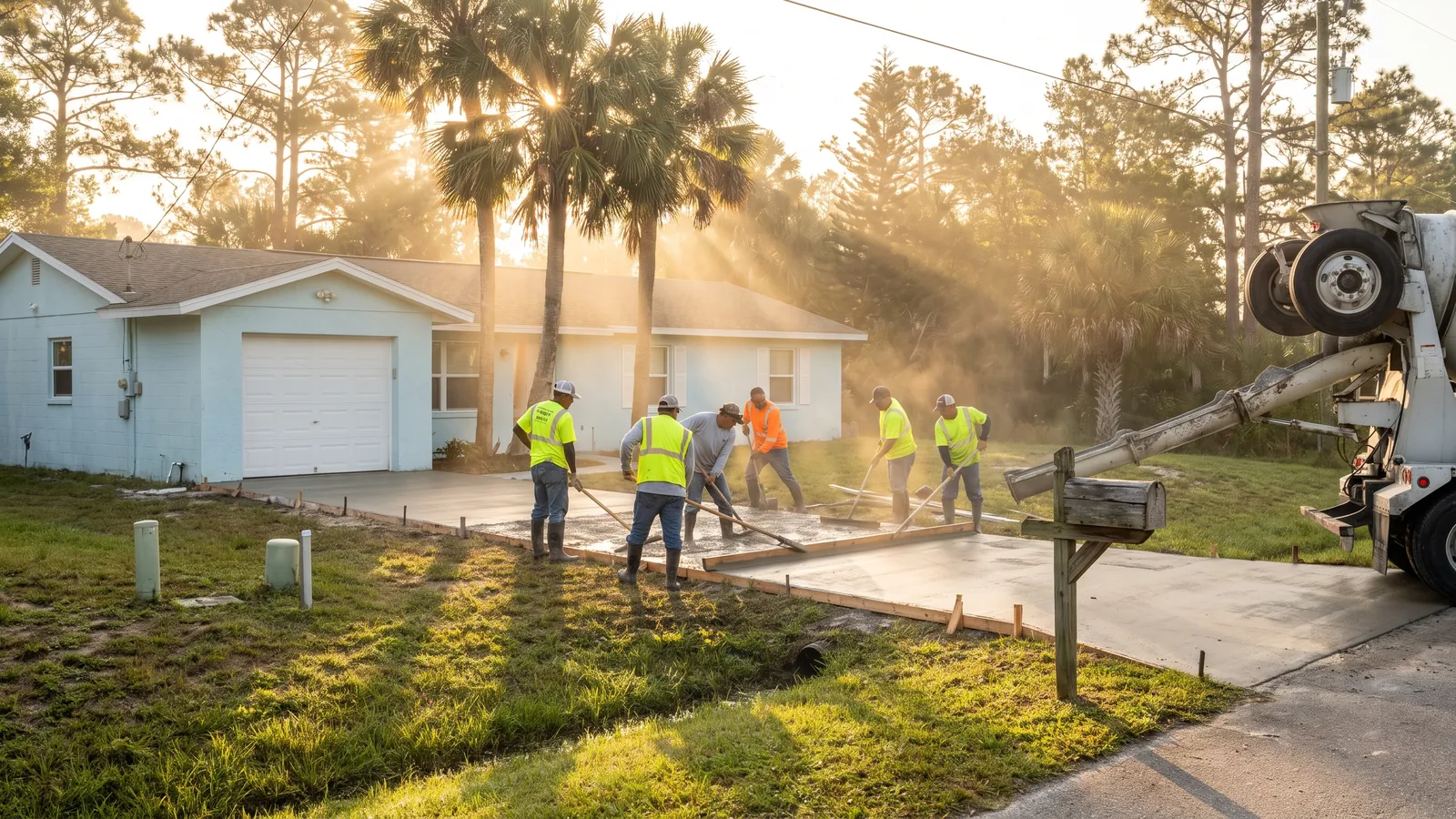
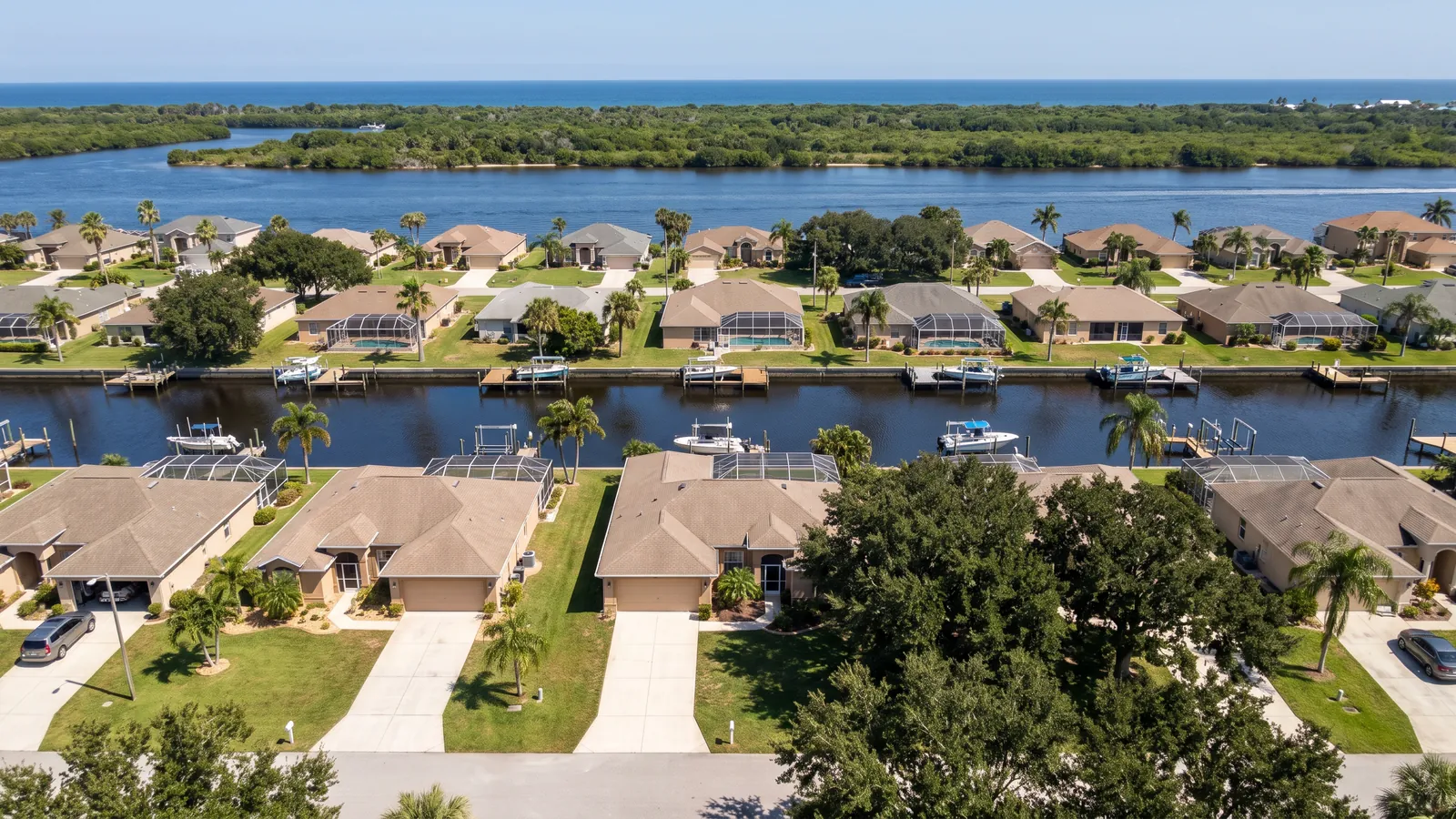
ITT platted Palm Coast in 1969 as tens of thousands of quarter-acre lots on a grid of lettered sections — the B-section of Indian Trails, the C- and F-sections of Palm Harbor with their saltwater canals, the E-section of Cypress Knoll, the K, LL and Z sections of Quail Hollow, L-section Matanzas Woods, P-section Belle Terre and Pine Grove, R-section Lehigh Woods, the S and U sections of Seminole Woods, W-section Pine Lakes. The city that grew on that grid went from 89,258 people in the 2020 census to an estimated 110,330 by April 2025, and Flagler County passed 140,000 — one of the fastest-growing counties in Florida. Thousands of the original lots are still being built out, which means a lot of new driveways, a lot of new swale aprons, and a lot of contractors who've never seen a Palm Coast culvert detail.
The ground under all of it is the same: poorly drained flatwoods sand over a hardpan, a water table three to ten feet down, 52 inches of rain a year, and a stormwater system that runs through the swale in front of your house to a canal behind someone else's. Then there's the coast: the Hammock and Flagler Beach take salt spray and, every few years, a storm — Matthew in 2016 took out A1A in Flagler Beach, Ian and Nicole in 2022 flattened the dunes along all 18 miles of Flagler shoreline, and Milton in October 2024 dropped 12 to 16 inches of rain on Palm Coast in a week and did $19 million of private damage across the county.
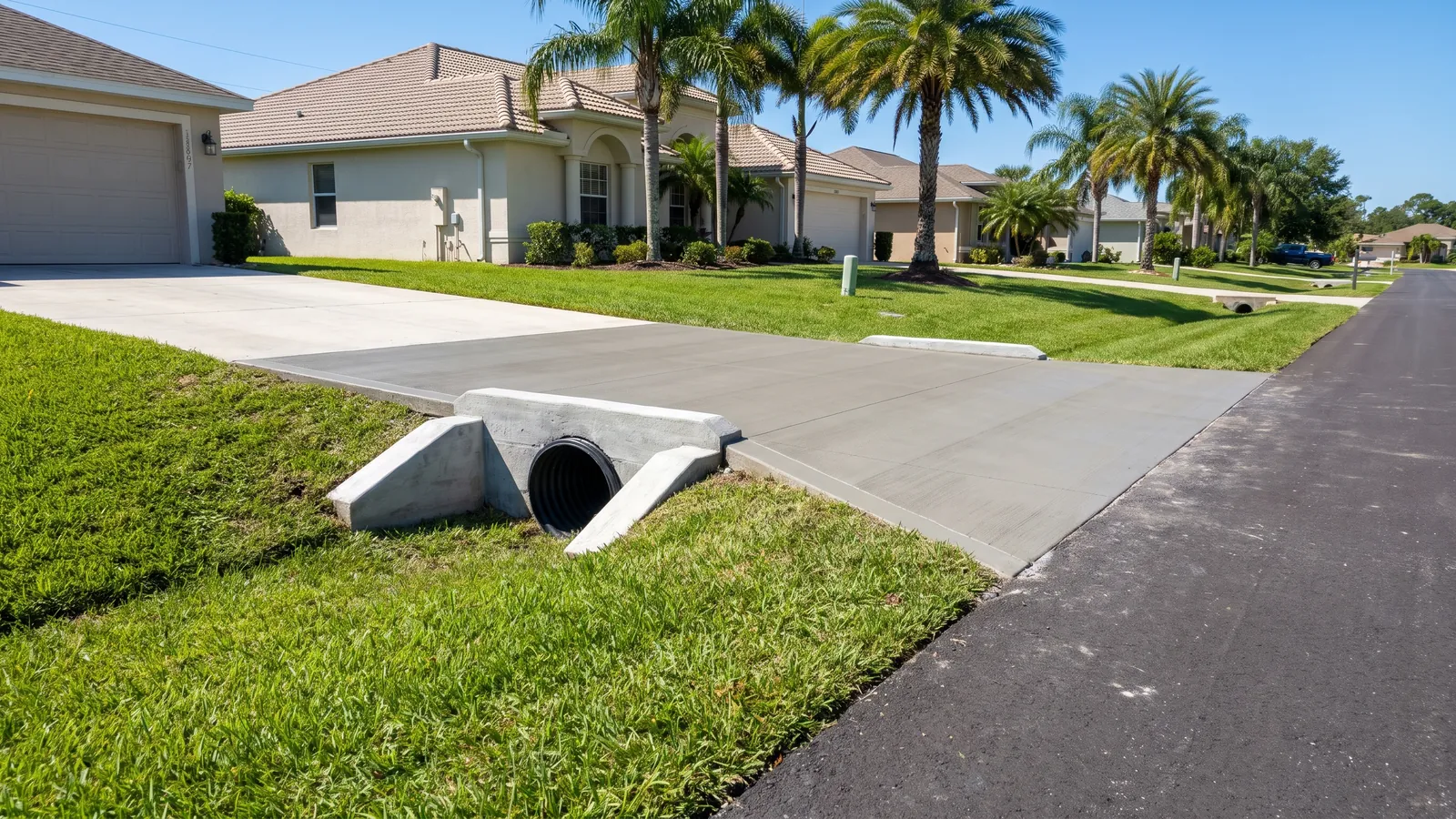
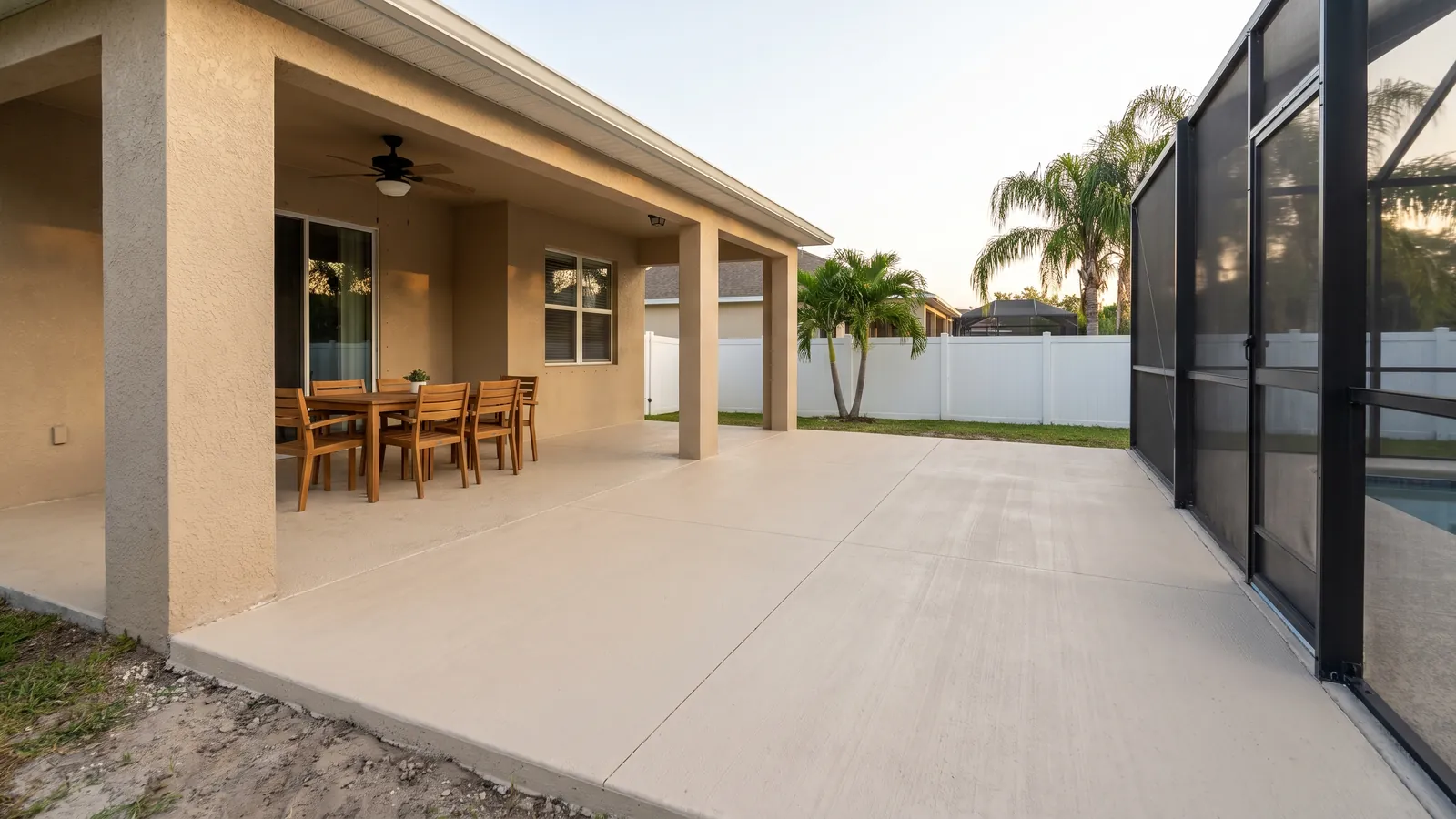
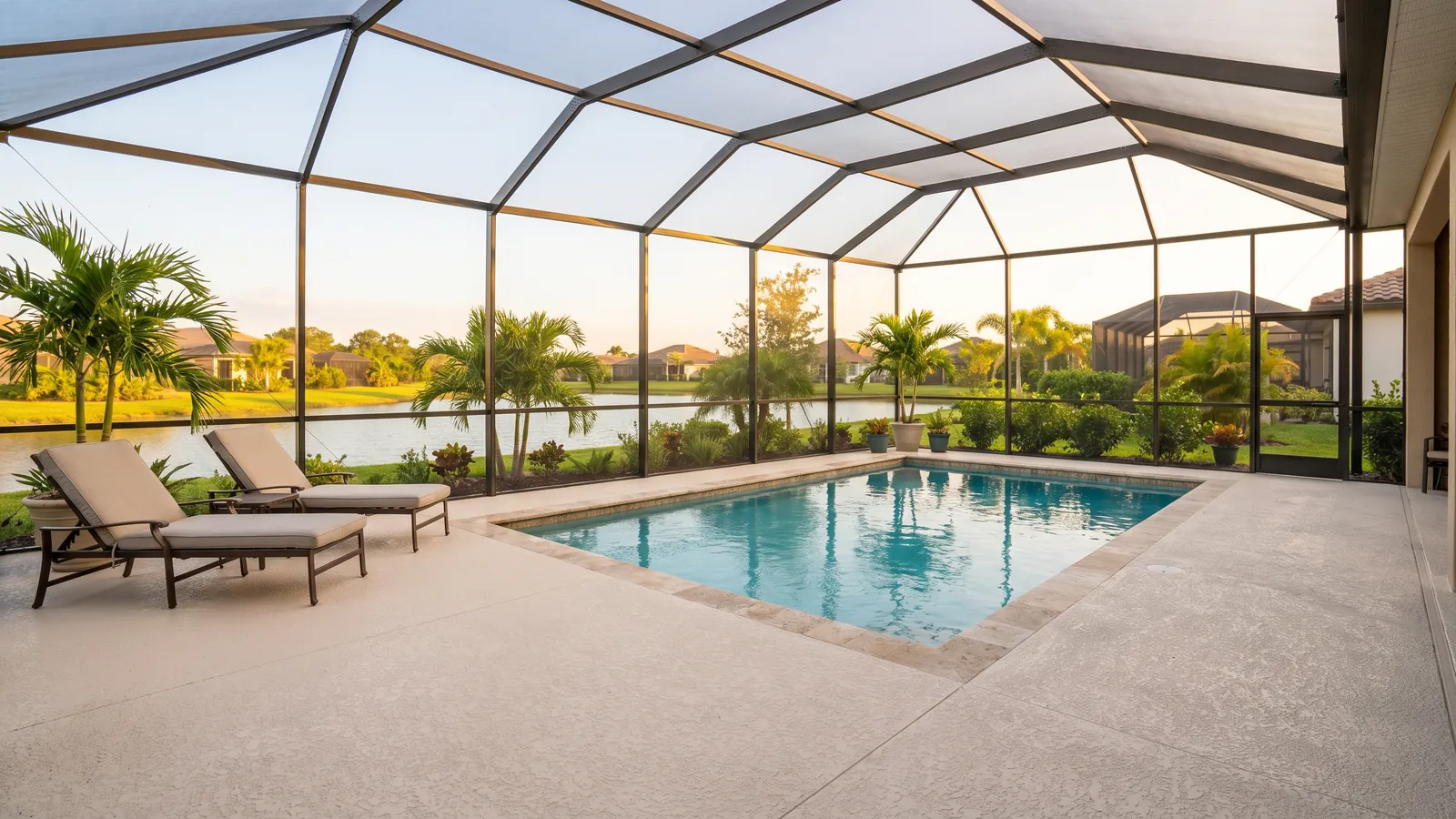
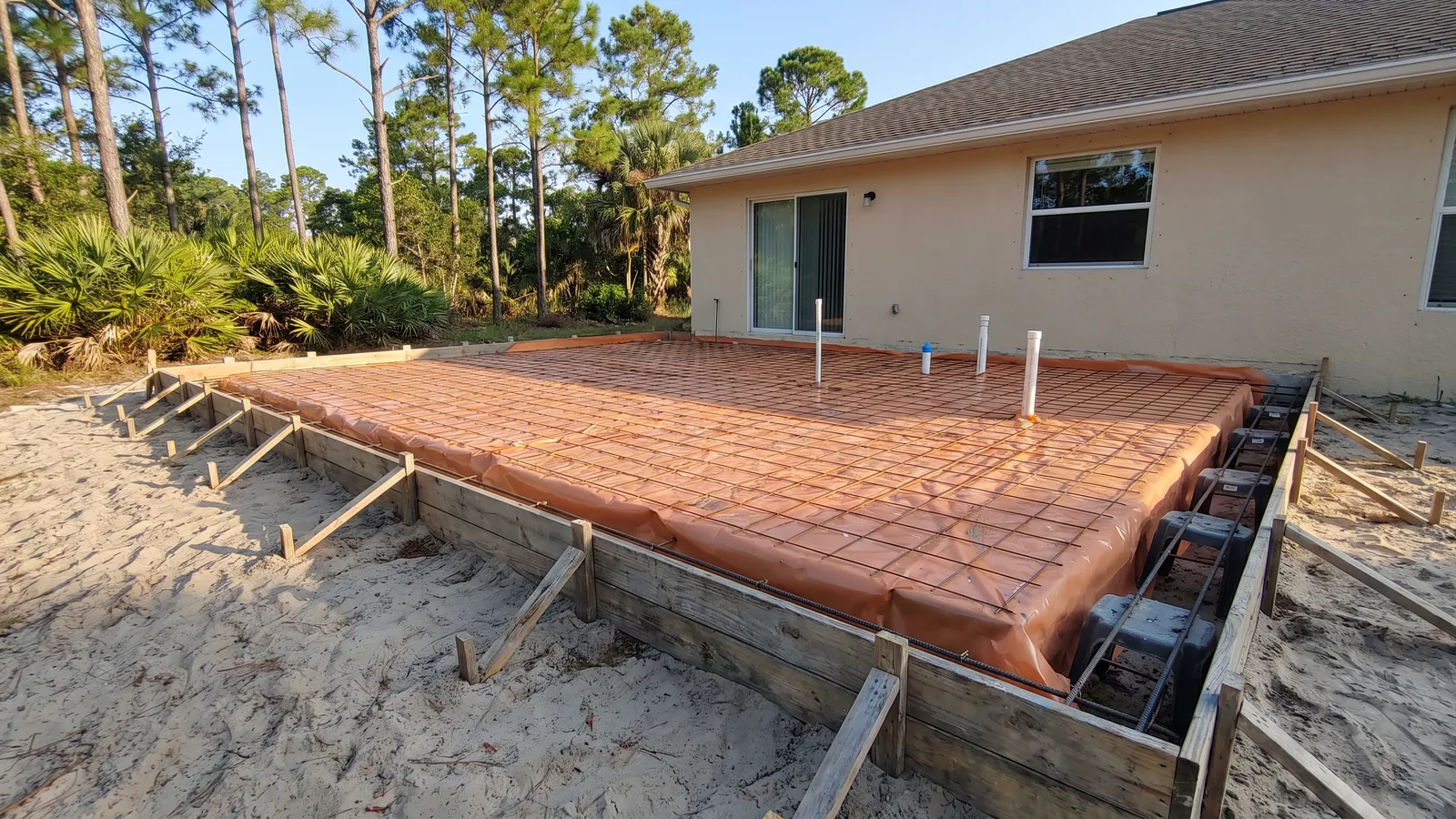
So we do the unglamorous things right: compact the sand in lifts, keep the base above the wet-season grade, pitch every slab away from the house and toward the swale, pour the apron to the city's detail with real mitered ends, set control joints where the slab wants to crack anyway, use a tighter mix and proper steel cover on the island, and seal what we finish. And because we're here year-round, we're the crew that answers when the apron drops after the next storm.